Surface comfort needs comparable evidence for the exact color and product. This site does not have a verified dataset that can name a universal coolest material.
Next decision: Describe barefoot use, hours of sun and shade; compare manufacturer evidence on the same test basis.
Keep in mind: A sample touched in the shade cannot predict an installed deck in afternoon sun.
A useful comparison needs comparable conditions
- 01Identify samplesExact product and finish
- 02Record conditionsSame time, place, method
- 03Interpret narrowlyObservations ≠ safety rating
Describe how people will use the surface
Record when the dock is used, whether people will be barefoot, which areas receive shade and whether children or people with limited mobility regularly use it. Include the intended finish and color in the material comparison. These details make the comfort question more useful than simply asking which decking is coolest.
Document the timing of shade and sun on the proposed layout. A small shaded sample does not represent a long unshaded walkway in afternoon sun. Distinguish observations at the site from assumptions about a future installation.
Ask for comparable evidence
If a supplier presents surface-temperature information, ask about the test conditions, product color, measurement method and comparison basis. Avoid comparing numbers measured on different days or under different conditions as if they were a controlled test.
This site does not provide a verified temperature dataset or rank materials by heat. A representative sample can help the owner discuss appearance and feel, but it cannot guarantee future comfort. Where a defined performance requirement is necessary, establish it with the project team.
Include the operational choices
Discuss footwear expectations, access to shade and how users will be informed about site conditions. Coordinate any physical additions with the dock designer and applicable approvals. Do not assume that adding a feature has no effect on the structure or permitted layout.
Keep heat comfort separate from wet-surface traction. A material that feels acceptable in one condition has not thereby passed another performance requirement. Record both as distinct questions in the comparison brief.
Turn the observations into a request
Tell the materials team the actual exposure, intended use and finish preferences. Ask for representative samples and any relevant product-specific evidence, with its test basis. Preserve unanswered questions so they can be resolved before selection.
Use the same brief for each candidate product. This supports a fair decision without promising that a material category will behave identically across every color, finish and waterfront setting.
Design a repeatable sample comparison
A useful sample exercise controls the conditions it can and records those it cannot. Compare identified products and finishes at the same site, orientation and time, with consistent support and exposure. Note cloud cover, wind, shade and whether each surface is wet or dry. Record a sequence rather than a single convenient reading. These observations are a local comparison, not standardized product test data.
If using an infrared instrument, follow its instructions for surface characteristics, measuring distance and settings. Different finishes can affect interpretation. Keep the instrument and method in the record; do not present readings from unrelated photographs or supplier demonstrations as a controlled comparison. A temperature observation alone is not a safe-contact duration or barefoot safety rating.
Worked scenario: a sunny boarding platform
AI-assisted project scenario — no real site or measured temperatures are claimed. A family expects barefoot boarding on an unshaded afternoon platform. The brief separates material appearance from surface comfort, wet footing and practical shade options. Instead of declaring one species the coolest, the owner requests representative samples and any relevant test documentation for the exact proposed products.
The comparison sheet records product, finish, time, exposure and measurement method, leaving readings blank until someone actually collects them. A generated rendering can show the layout and the owner’s intended use, but cannot demonstrate temperature, slip resistance or weathering performance.
The resulting decision may include a material preference, a need for additional evidence, or a shade proposal to discuss with the project team. A shade structure introduces its own wind, structural and approval questions; it should not appear as an incidental accessory on a decking order. Keep those decisions connected without pretending the sample exercise resolves them.
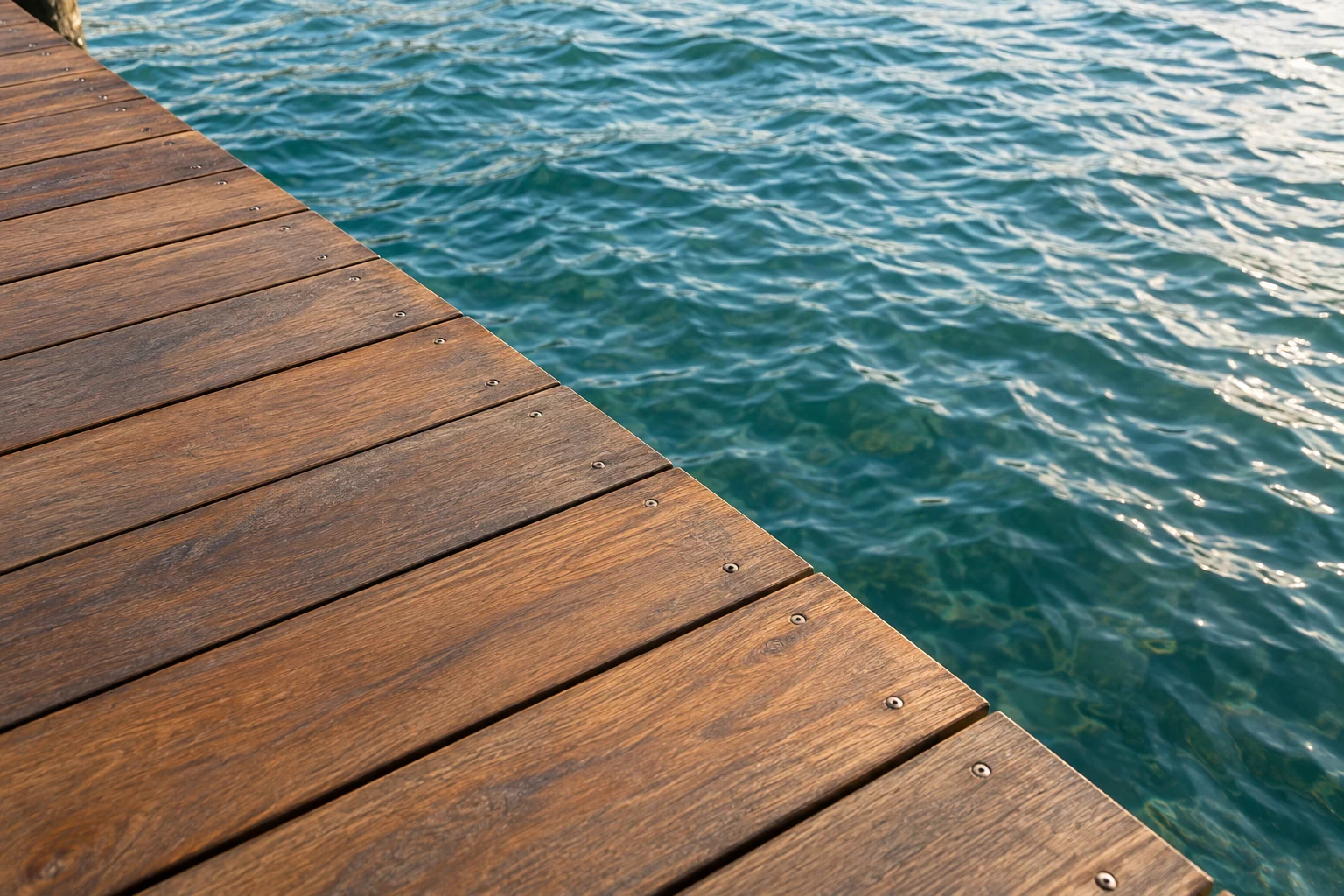
This page provides an editorial planning workflow. It does not supply product ratings, verified species data or engineering calculations.
Read our editorial standards →